Originally published on X on 2026-09-30 — read the original article.
While Pendle recorded ~$700M in monthly trading volume, that’s still way less than 0.1% of TradFi’s fixed-yield trading volume, making clear the idea that fixed yield remains one of DeFi’s biggest untapped markets.
Pendle got there first, and Morpho wants a piece of the pie with Midnight.
This post compares how they work, the differences and asks whether they compete or fit together.
Let’s start with the basics | ELI5 mode.
You probably already know the broad idea:
- Pendle separates an existing yield-bearing asset into its principal and future yield.
- Morpho Midnight lets people borrow against collateral with a fixed rate and a repayment date.
For someone looking for a fixed return, the payoff can look pretty similar. But the backing, the risks, and the reasons people use each product are different.
Pendle basics
Take sUSDS, which earns the Sky Savings Rate, currently displayed at 3.60% APY. That rate can change over time ➡️ Sky Savings Rate
Pendle wraps that asset and splits it into two pieces:
- PT, the Principal token: the claim you redeem at maturity.
- YT, the Yield Token: the right to receive the yield until maturity, plus any applicable rewards and points.
If you want a fixed return, you buy PT below its redemption value and hold it to maturity. That difference is your return.
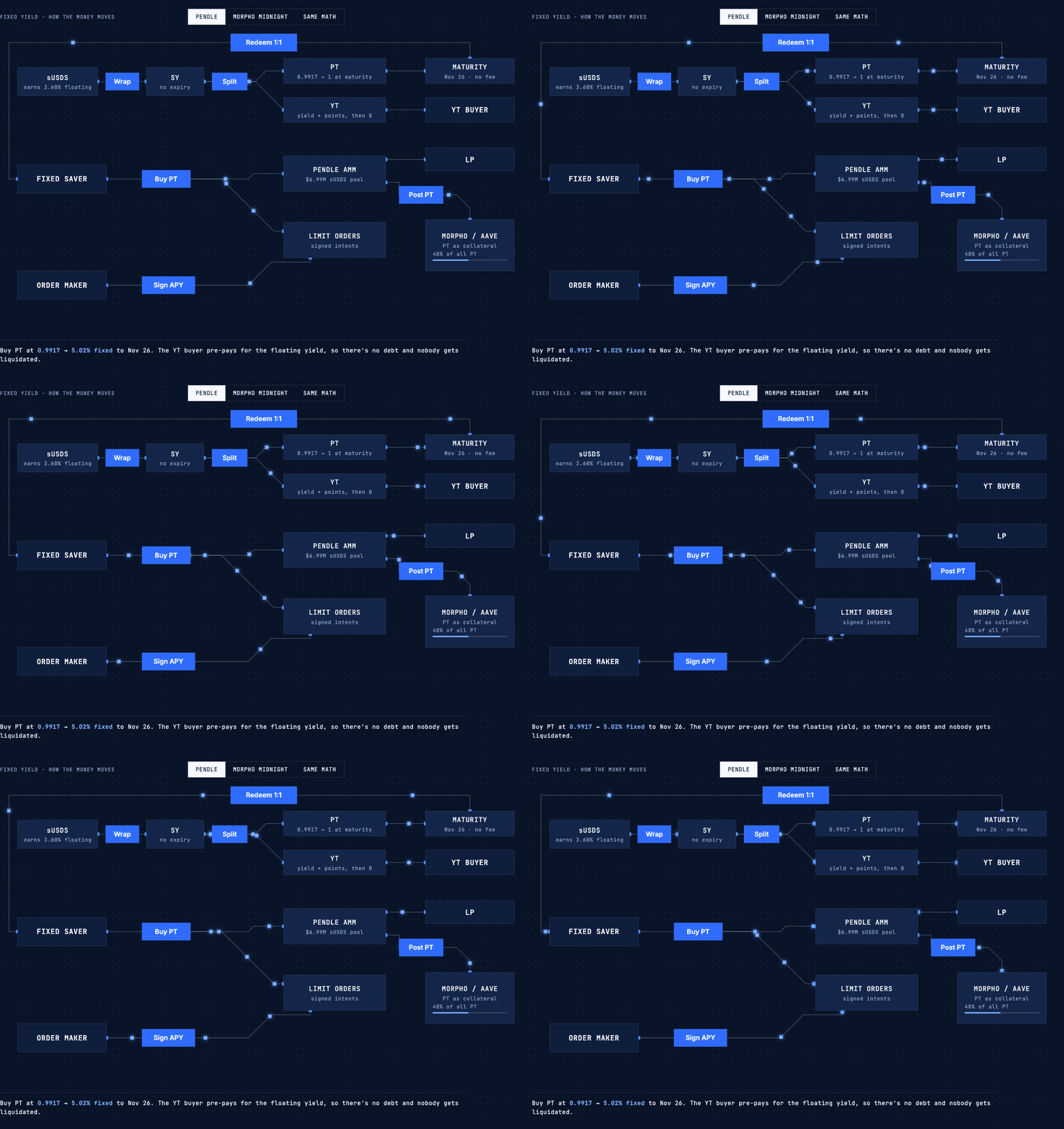
Think of paying 95 today for a claim you can redeem for 100 at maturity, both measured in the same asset. You earn the difference, before fees. That’s why PT behaves like a zero-coupon bond: no periodic interest payments, just a discounted purchase and a later redemption.
One detail matters here: PT’s redemption value is defined in its “accounting asset”, the asset used to measure the principal. That doesn’t automatically mean one guaranteed dollar, or one whole yield-bearing token. The underlying asset still matters. See Pendle’s PT explanation
YT buyers pay upfront for the yield and rewards until maturity, hoping they’ll be worth more than they paid. PT holders give up that exposure to fix their return.
And tbh, in crypto, “rewards” often means incentives or points tied to a potential airdrop. Imo, that speculation has been a big part of Pendle’s growth story...
But Pendle's design is built to support organic PMF which ideally doesn't rely on temporary incentives: trading yield from ETH staking, lending, or tokenized assets like private funds NAVs or stock dividends through compatible tokens.
Though, for that to scale, each market needs enough liquidity for larger players to enter and exit without moving the price too much. That’s where I think the next challenge is on Pendle side (have PMF without indirect incentives)
Going back to sUSDS example. ...When I checked, its November 26 market displayed 4.78% fixed APY, compared with the 3.60% variable APY on sUSDS. Those are annualized rates, not the total return between now and November... and are driven not by the yield itself but by incentives given by Spark to YT holders.
Now, Midnight.
Midnight is Morpho’s fixed-rate, fixed-term lending protocol, separate from the variable-rate Morpho Blue (i.e. there's no released Morpho adapter to deposit from Vaults V2 into Midnight markets so far)
Each market defines the loan asset, maturity date, and accepted collateral. Anyone can create a market (although individual markets can restrict access)
Lenders buy credit units at a discount. Each unit represents a claim on one loan token repaid by borrowers. Borrowers put up collateral, receive funds today, and take on a fixed repayment obligation.
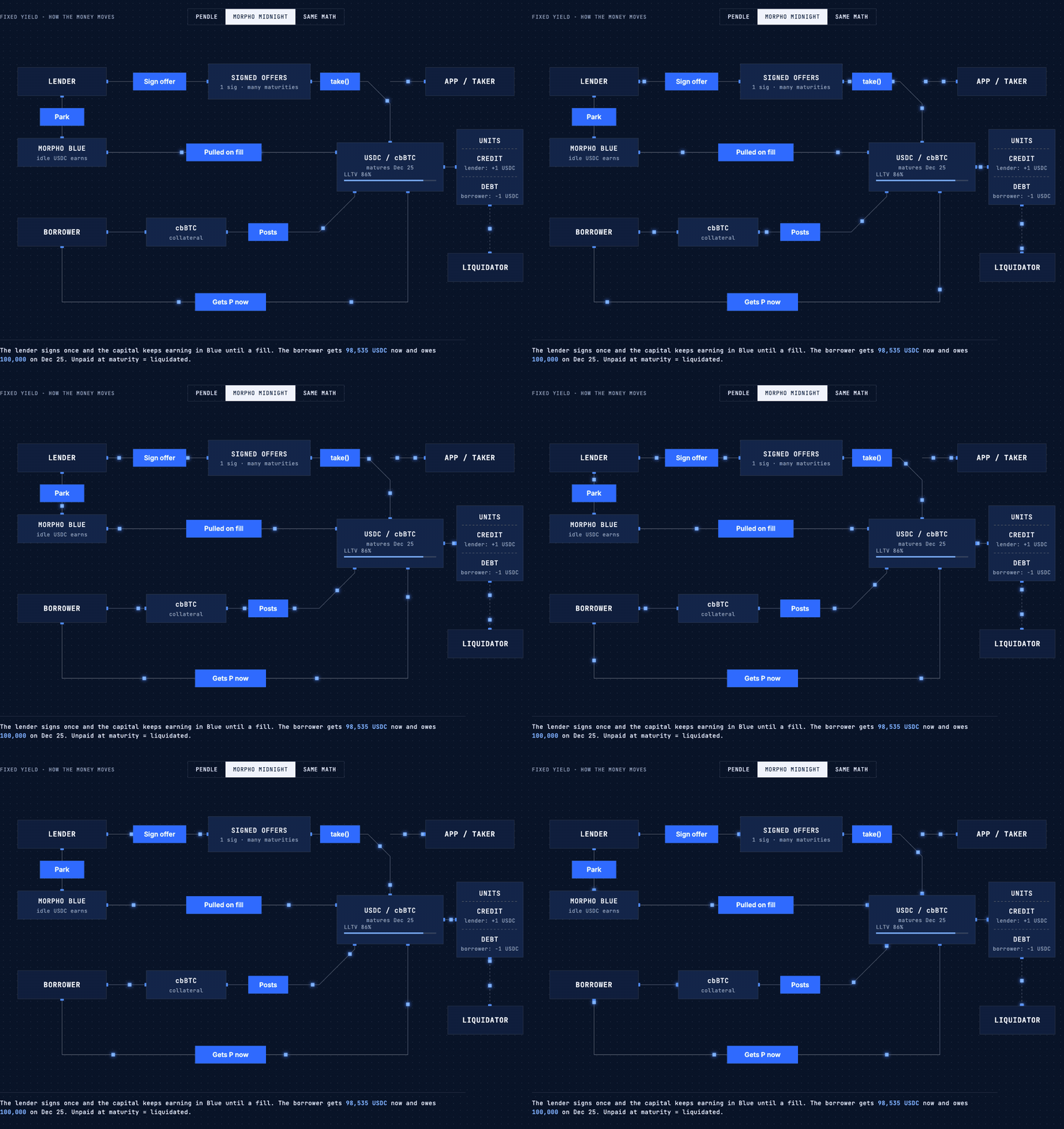
Check out this market for USDC loans backed by cbBTC, maturing on October 30
Imagine that:
- A borrower deposits enough cbBTC as collateral, receives 99.6 USDC, and owes 100 USDC by October 30.
- A lender pays 99.6 USDC for 100 credit units, representing a claim on 100 USDC in repayments.
The lender’s expected gain is 0.4 USDC ≈ 5% APY.
That amount is fixed upfront, but losses are still possible if repayment and collateral recovery fall short.
So here, the fixed return comes from a collateralized debt obligation. The lender holds a claim on repayments across the market, rather than on one specific borrower. I recommend going more into detail checking How Midnight’s positions work or @defi_milos YT video.
Into the difference
Underlying exposure
So... the discount-to-maturity math looks familiar, but the backing is different:
- Midnight lenders depend on borrower repayments and collateral recoveries.
- Pendle’s PT redeems against the asset deposited in its yield-tokenization structure.
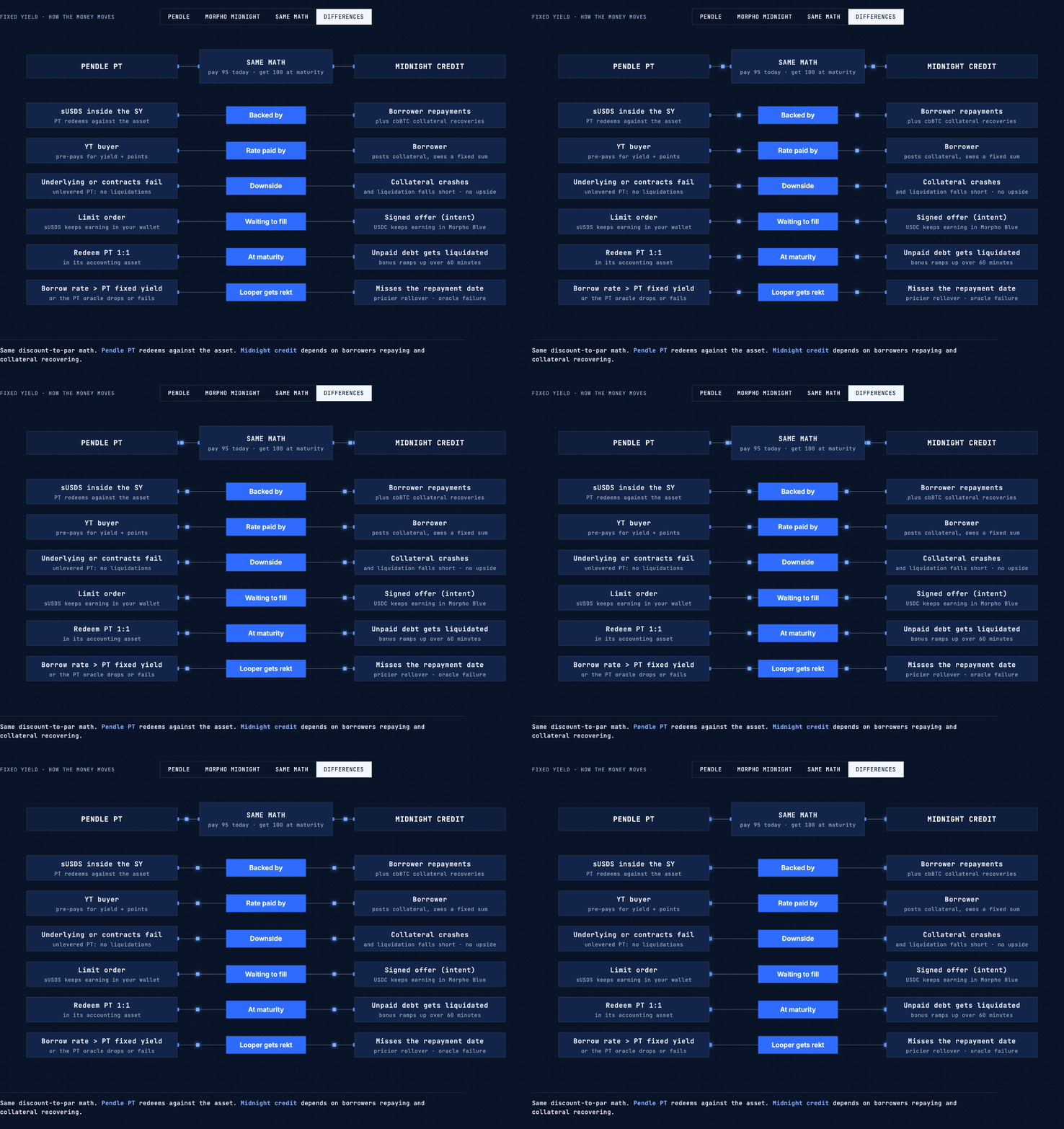
Aka, with Midnight you’re indirectly exposed to the collateral’s downside: you don’t earn more if cbBTC pumps, but you can lose money if it crashes and liquidations don’t recover enough.
Setting LTV limits according to the collateral’s volatility and liquidity helps create a buffer against those losses. But “collateral being safu” also depends on liquidations & oracles working when needed.
While in Pendle you mainly still carry the risks of its underlying asset + the Pendle smart contract risk & liquidity before maturity (in case you need to exit)
Intents and capital efficiency
One of Midnight’s big perceived innovations is its intent-based structure. I’d give it credit for that, but Pendle deserves some credit too, since its design already lets you achieve somewhat similar outcomes. Let’s see why:
Midnight lets participants publish signed offers specifying their price and size. A taker finds an offer and settles it onchain. This lets lenders keep their capital in a variable-rate position until their desired lending terms are met—for example, lending USDC against cbBTC collateral for six months at 5% (while meanwhile they can stay in current cbBTC variable markets).
Today you can already earn variable rates on Vaults V2 while your order waits to be matched at @TenorFinance. I expect native Morpho vault support soon, and in theory, with the right adapter, you could plug in Aave or even Pendle positions too.
And this is indeed a great intent based solution, but....
Pendle offers some of that capital efficiency too. In addition to their AMM, you can place limit orders using SY or supported yield-bearing tokens like sUSDS, or sell PT you already hold. Those assets stay in your wallet until the order fills: sUSDS keeps earning yield, while PT retains its fixed-return exposure, whether or not you also hold YT. So you can keep your capital working while expressing your intent to trade at a specific rate. Check Pendle limit-order mechanics
I mean, calling one an “intent” and the other a “limit order” doesn’t make the underlying idea new... though it may be on the lending market context.
So both let your capital keep earning while you wait for your rate. The difference is where it can wait: Midnight opens a much wider range of variable-rate bases (Morpho Blue, vaults, and potentially Aave or others via adapters), while Pendle, as it works today, only lets you wait in the underlying asset or the PT itself.
Risks
Also, there is an important difference that shows up when things go wrong, mainly for loopers on either protocol or regular borrowers on Midnight.
- On Pendle, a PT is backed by the asset inside its yield-tokenization structure... so if you hold an unleveraged PT to maturity, getting rekt would usually mean something went wrong with the underlying asset, its protocol, or Pendle’s smart contracts.
- Midnight credit depends on borrower repayments, which are reliant on collateral itself (and you can add the oracle as well). With a cbBTC-backed loan, as a lender earning a fixed yield, you should be OK since collateral is safe and liquid enough: once maturity passes, unpaid debt becomes liquidatable, so in theory liquidators step in quickly and you can recover your USDC shortly after (again, assuming the collateral is liquid and healthy)
After maturity, unpaid debt becomes liquidatable even if the collateral remains healthy. The post-maturity liquidation bonus ramps up over 60 minutes, increasing the incentive for liquidators to step in and make funds available for lenders to withdraw their principal and fixed return.
Now, as a borrower or looper on Midnight, you can get rekt if you don’t repay on time... even with safe collateral. There are automation features in protocols like @TenorFinance and @DeFiSaver to help manage this, and I guess Morpho may offer some natively too (since could be a revenue source ha )
Where Pendle and Morpho already meet
Morpho lets people create isolated lending markets with risk parameters tailored to specific collateral. That makes it easier to support more specialized assets like Pendle PTs.
Several Morpho Blue markets already accept PTs as collateral. For example, Armitage by Wintermute’s Pendle Ecosystem USDC vault currently shows around $60M in TVL and allocates exclusively to selected PT collateral markets. So Morpho is already financing people holding Pendle’s fixed-yield assets.
The usual loop is straightforward: buy PT → post it as collateral → borrow at a variable rate → potentially buy more PT.
As a PT looper, even with fixed-rate financing, you still rely on the oracle design: you can get rekt if the price reported by the collateral oracle drops, whether because of manipulation or a real market move.
So far, the PT return is fixed if held to maturity and it has pretty good liquidity. But the financing cost floats. And that’s the gap Midnight can help address... and we’re already starting to see it: there’s an Ethereum Midnight market accepting PT-sUSDat-14JAN2027 as collateral (in an ideal scenario, maturities of PTs and markets are matched).
So... the synergy between PTs and Midnight is pretty clear. The next question is whether credit units could be used as collateral to loop on Morpho itself, and even take over PTs' role. For that, I guess you'd need some sort of wrapper to turn those credit units into an ERC-20 token.
Some numbers today
Pendle is clearly much further ahead: Midnight is still tiny compared with it when it comes to fixed yield, though it’s growing quickly from a small base.
Midnight launched on July 21 with about 4.6M in collateral and has about 3M of which are on Base. Midnight’s Ethereum deployment only went live last week.
Meanwhile, Pendle is entering the RWA trenches more aggressively by incorporating higher-yielding assets like NGI+, which, imo, makes more sense for driving organic adoption and finding PMF.
The Morpho team has clarified that they’re aiming for a gradual rollout for both security and strategic reasons. And if either protocol manages to bring even a small share of fixed-rate credit onchain, these numbers will look like peanuts. So let’s hope they do...